
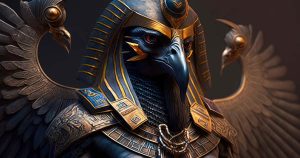
langerhanscellhistiocytosis.org – In the rich tapestry of ancient Egyptian mythology, Ra stands as one of the most prominent and revered deities. Known as the Sun God, Ra was not only a central figure in the Egyptian pantheon but also a symbol of life, warmth, and growth. His journey across the sky each day was a testament to the power of the sun, and his influence permeated every aspect of Egyptian life, from religion to art and beyond.
The Origins of Ra
Ra’s origins can be traced back to the city of Heliopolis, one of the most ancient cities in Egypt. Here, he was worshipped as the creator god, who brought forth the world from the primordial waters of chaos. According to myth, Ra’s tears and sweat gave rise to humanity, further cementing his role as the father of all.
The Journey of Ra
One of the most fascinating aspects of Ra’s mythology is his daily journey across the sky. Each morning, Ra was born anew, rising in the east to bring light and life to the world. His journey across the sky was not without peril, as he had to navigate through the treacherous realms of the Duat, the underworld, during the night. This nightly journey was fraught with dangers, including battles with the serpent Apep, who sought to devour Ra and plunge the world into eternal darkness.
Symbols and Representations
Ra was often depicted in various forms, each symbolizing different aspects of his power. He could appear as a falcon, with a sun disk and cobra on his head, or as a man with the head of a falcon, adorned similarly. The sun disk, or Aten, was a powerful symbol of Ra, representing his all-seeing eye and his omnipresence.
The Cult of Ra
The worship of Ra was widespread throughout ancient Egypt, with temples dedicated to his honor in many cities. The most famous of these was the Temple of Ra at Heliopolis, which was a center of learning and religious practice. Priests of Ra played a crucial role in the daily rituals that were believed to sustain the sun god’s journey and, by extension, the world itself.
Ra in Egyptian Culture
Ra’s influence extended beyond the realm of religion into the daily lives of the ancient Egyptians. The sun was essential for agriculture, and thus Ra was seen as the provider of sustenance. His power was invoked in magic spells, and his protection was sought in amulets and other forms of religious paraphernalia.
Conclusion
Ra, the Sun God, remains one of the most enduring symbols of ancient Egyptian civilization. His mythology, rich with themes of creation, life, and renewal, continues to captivate the imagination. As the giver of life and the vanquisher of darkness, Ra’s legacy is a testament to the enduring power of the sun in the human psyche, a symbol of hope and the eternal cycle of birth, death, and rebirth.
