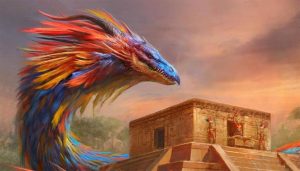
langerhanscellhistiocytosis.org – Quetzalcoatl, often translated as the “Feathered Serpent,” is one of the most significant deities in Aztec mythology. This enigmatic figure embodies a complex blend of characteristics, representing both wisdom and death, renewal and destruction. Quetzalcoatl’s influence extends beyond the Aztecs, with roots in earlier Mesoamerican cultures, such as the Toltecs and the Maya, where he is known by different names but holds similar significance.
The Dual Nature of Quetzalcoatl
Quetzalcoatl is a deity of dual nature, embodying the balance between opposing forces. On one hand, he is the god of wind, learning, and knowledge, often depicted as a benevolent ruler who taught people the arts of civilization. On the other hand, Quetzalcoatl is also associated with death and the underworld, a reminder of the cyclical nature of life and the inevitability of change. This duality is symbolized by his serpentine form, which represents the shedding of old skin and rebirth, and the feathers of the resplendent quetzal bird, signifying beauty and the heavens.
Quetzalcoatl in Aztec Culture
In Aztec society, Quetzalcoatl played a crucial role in both religious and political life. He was revered as a patron of priests and the twin brother of Tezcatlipoca, another major deity who represented the night, the north, and the earth. The relationship between Quetzalcoatl and Tezcatlipoca is often depicted as a cosmic struggle between light and darkness, order and chaos.
Quetzalcoatl was also associated with the planet Venus, particularly in its aspect as the morning star, symbolizing renewal and the promise of a new day. This celestial connection underscores his role as a harbinger of change and a guide through the cycles of life.
The Legend of Quetzalcoatl’s Departure
One of the most famous myths involving Quetzalcoatl is his departure from the earth. According to legend, Quetzalcoatl was tricked by Tezcatlipoca into breaking his vows of chastity and sobriety. Overcome with shame, Quetzalcoatl left the world, promising to return one day. This narrative not only highlights the rivalry between the two deities but also serves as a prophecy of Quetzalcoatl’s eventual return, which was believed to herald a new era.
Quetzalcoatl’s Legacy
The legacy of Quetzalcoatl extends beyond the realms of myth and religion. He has become a symbol of Mesoamerican identity and a figure of fascination in the modern world. Quetzalcoatl’s image can be found in various forms of art, literature, and popular culture, where he represents the enduring allure of ancient wisdom and the mysteries of the cosmos.
Moreover, Quetzalcoatl’s association with the planet Venus has led to comparisons with other world cultures that venerate the morning star, suggesting a universal recognition of celestial phenomena and their impact on human consciousness.
Conclusion
Quetzalcoatl, the Feathered Serpent, remains a powerful symbol of Aztec mythology and Mesoamerican culture. His complex nature, embodying both creation and destruction, wisdom and death, reflects the intricate worldview of the Aztecs and their predecessors. As a deity who transcends time and space, Quetzalcoatl continues to captivate the imagination, reminding us of the enduring power of myth and the eternal dance of life and death.